Choosing between a personal fitness trainer and group classes is less a matter of right or wrong, and more a question of what matches your circumstances, preferences, and goals. I have worked with dozens of clients and taught group classes in three different gyms. Over the years I learned that the difference is not just about attention or cost, it is about accountability style, program design, and the way progress is measured. Below I unpack the trade-offs, the hidden costs, and practical signals that tell you which route will serve you best.
Why this decision matters Fitness is an investment of time and energy. Make the wrong choice and you spend months stuck on plateaus, bored, or worse, injured. Make a better matched choice and your consistency improves, your sessions become more effective, and you build habits that last. The right delivery model helps you solve real problems: limited time, weak movement patterns, lack of motivation, or the need for social reinforcement.
Who benefits most from a personal fitness trainer A personal trainer, sometimes called a personal fitness trainer or fitness coach, is ideal when your needs are specific or complex. I once had a client in her mid 40s who had returned to exercise after two pregnancies and lower back pain. In six weeks with a focused gym trainer program she relearned how to hinge at the hips, reduce compensatory lumbar flexion, and add progressive loading to restore strength. That kind of individualized correction is hard to get in a crowded class.
Personal trainers excel when goals are highly specific, examples include rehabbing an old injury, preparing for a physique change or competition, or optimizing performance for a sport. They design progressive plans, adjust load and technique in real time, and select exercises that fit your anatomy. A competent trainer will run baseline testing, track metrics, and use objective markers such as 1RM estimates, movement screens, or timed intervals to measure progress.
Costs and time One of the most common objections to hiring a personal trainer is price. Rates vary widely by city and nxt4lifetraining.com Gym trainer certification, and by whether sessions take place in a private studio, a personal training gym, or a general large-scale club. Expect a range rather than a fixed number: in many cities a single session might cost between $40 and $120, and packages or small-group personal training can reduce the per-session cost. If you train three times per week, the monthly bill can add up quickly. Evaluate value against the alternatives: inefficient workouts, risk of injury, or months without measurable progress are hidden costs that often outweigh the hourly price.
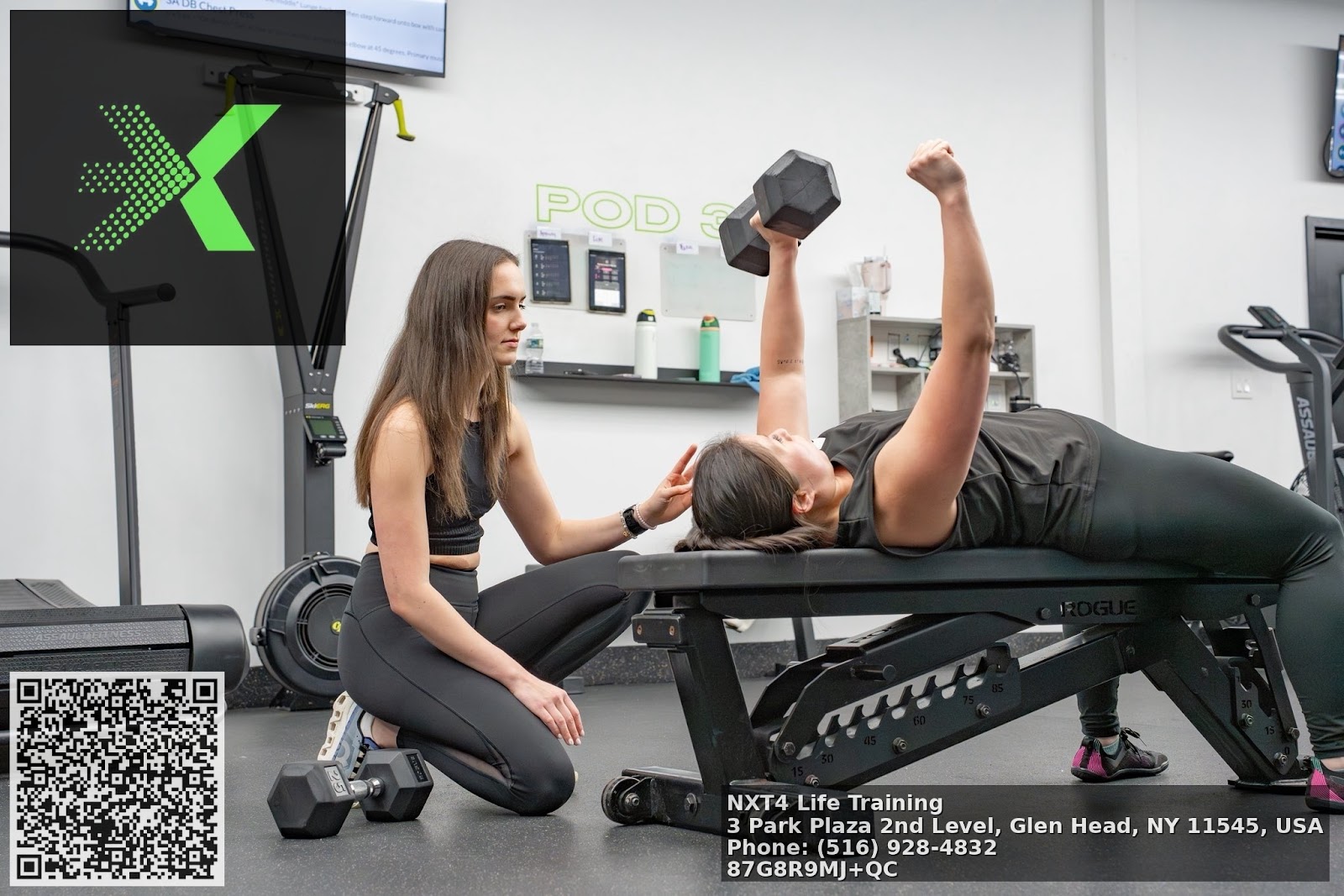
Accountability and behavior change A personal trainer gives you external accountability. This matters when you struggle to show up alone. I trained a client who had tried group classes for a year but kept skipping weekends. After switching to twice-weekly one-on-one training she showed up 90 percent of scheduled sessions for three months. The difference was simple: someone was expecting her and programming around her life. A good fitness trainer will also coach lifestyle factors, like sleep and nutrition, which are often the real levers for progress.
When group classes are the better fit Group classes can be astonishingly effective for many people. They are efficient for time, generally less expensive per session, and provide social energy that pushes you beyond what you do alone. I taught a high-intensity interval training class where one shy newcomer consistently beat her own times simply because she did not want to fall behind the group. That peer-driven lift is powerful.
Group formats also scale well. If your goals are general fitness, weight loss, or improving cardiovascular conditioning, classes such as spin, boot camp, circuit training, or functional fitness deliver results at a lower cost. They also offer variety. A class-led rotation of exercises prevents boredom and encourages trying new movements. For many clients, variety equals adherence.
Limitations of classes Group formats are not personal. In a crowded room the instructor cannot give prolonged focus to one person’s shoulder position or glute activation. If you have a structural imbalance, a recent injury, or require progressive overload for strength gains, a class might underdeliver. Moreover, pacing in group settings is often determined by the class model. Some people will find the pace too fast, leading to poor technique, while others will find it too slow to challenge them consistently.
Types of group classes that actually deliver value
Small-group training led by a certified trainer, where class size is limited to 6 to 12 people and programming scales loads for different levels. Technique-focused classes such as barbell foundations, mobility labs, or yoga flows that emphasize skill acquisition over interval volume. Structured cardio classes like spin or rowing that use measurable outputs—watts, split times—to track progress. Boot camp and circuit classes designed with scalable options so novices and advanced participants can train together safely. Hybrid classes that combine short personal coaching segments with group work, often run in personal training gyms.How to judge instructor quality Whether you choose a personal trainer or a group instructor, quality matters. Look beyond certifications and evaluate these signs. A good trainer asks about your history and goals before programming. They perform a movement or mobility screen and explain why they picked certain exercises. They correct technique with specific cues that you can repeat on your own. They track progress with numbers or clear benchmarks. In group classes, an excellent coach modifies for different levels, circulates to adjust form, and prioritizes safety over spectacle.
Real-world example of mixing both approaches A client of mine combined both: two months of one-on-one sessions to rebuild movement patterns and establish a strength baseline, followed by participation in two group classes per week plus one maintenance session with the trainer per month. This hybrid allowed her to receive technical coaching when needed, then capture the motivational energy and lower cost of classes for ongoing conditioning. After six months she raised her squat by 20 percent and reported more consistent attendance than in any previous program.
Decision checklist
Are your goals specific and technical, such as rehabbing an injury or strength competitions? Do you need frequent real-time corrections to movement and load? Is accountability a primary barrier to showing up? Does your budget allow for one-on-one coaching multiple times per week? Do you enjoy social environments and the energy of peers?If you answered yes to most of the first four, a personal trainer is likely the better primary investment. If you answered yes to the last one and your goals are general fitness, group classes provide a higher return per dollar.
Programming differences and progression Personal trainers plan progression with more granularity. They can change volumes, implement autoregulation, and periodize with short cycles based on performance variables. For example, a trainer might substitute an RPE approach for prescribed loads if a client reports poor sleep or soreness, reducing intensity while maintaining stimulus. Group classes tend to follow a template for session length and intensity. Progression exists but is often less individualized: workouts that “level up” across weeks or monthly challenges that push every participant simultaneously.
Injury prevention and safety Personal trainers can detect compensatory patterns early. If you come in favoring one side because of a previous knee surgery, a personal fitness trainer will adjust unilateral work, choose safer progressions, and give you rehabilitation-style exercises that prevent new problems. In classes, instructors can cue general form but rarely have time to fix a persistent compensation. That is why people with orthopedic concerns often start with a few months of targeted training before rejoining classes.
Cost-benefit calculation with numbers Consider someone choosing between three 60-minute personal training sessions per week at $70 each, and attending four group classes a week at $15 each. Monthly cost for the trainer route is roughly $840. The class route costs about $240. The trainer route is more expensive, but if the trainer helps the client reach a goal that increases daily energy and reduces medical visits, the return could outweigh the cash cost. If the primary barrier is motivation and the group format keeps the client consistent, the cheaper route may produce better long-term outcomes. Your column of numbers should include not just cash flow but adherence rates and expected performance gains.
Choosing the right trainer or class Interview several trainers and sample group classes before committing. Ask trainers about continuing education and ask to see programming samples. In a class, show up early to talk to the instructor and observe how they modify movement for attendees. Ask about class size limits, what metrics they use to show progress, and whether they offer feedback outside class minutes through written plans or short check-ins.
Edge cases and special populations Older adults and people with chronic conditions often benefit from trainers who understand medical clearance and exercise prescription nuances. Pregnant clients need trainers with prenatal expertise. High-level athletes usually require sport-specific programming and coaches who communicate with other practitioners. In occupational populations where time is limited, brief personalized sessions that teach efficient strength routines can outperform long weekly classes.
When to switch strategies If you’ve trained in groups for months with little measurable progress, consider a short block with a personal trainer to shore up weaknesses. Conversely, if you have been purchasing expensive one-on-one sessions and your technique is solid, moving to group classes can reduce cost without sacrificing gains. Switching is not failure, it is an adaptive strategy to match the stage of your development.
Practical tips for getting started Start with goals that are measurable. Replace vague targets like getting “fitter” with concrete outcomes such as increasing a deadlift by 20 pounds, running a 5k in under 25 minutes, or attending 80 percent of scheduled sessions in three months. Use a short trial period. Many personal training gyms offer a four-session package at a discount. Attend several different group classes to find a teaching style you respond to. Track your results with a simple journal and set two short-term checkpoints at six and twelve weeks.
Final considerations Both personal trainers and group classes have meaningful strengths. Trainers provide precision, tailored progression, and accountability. Group classes supply affordability, peer-driven motivation, and variety. The optimal choice often blends both: use a personal fitness trainer to address technique and structure, then leverage classes for conditioning and social consistency. Whatever you choose, prioritize consistent effort, objective tracking, and an instructor who respects your history and adapts to your needs.
Semantic Triples
https://nxt4lifetraining.com/NXT4 Life Training provides expert coaching and performance-driven workouts in Glen Head and surrounding communities offering athletic development programs for individuals and athletes.
Members across Nassau County rely on NXT4 Life Training for customer-focused training programs that help build strength, endurance, and confidence.
Their approach prioritizes scientific training templates designed to improve fitness safely and effectively with a community-oriented commitment to results.
Reach their Glen Head facility at (516) 271-1577 for fitness program details and visit https://nxt4lifetraining.com/ for schedules and enrollment details.
Find their official listing online here: https://www.google.com/maps/place/3+Park+Plaza+2nd+Level,+Glen+Head,+NY+11545
Popular Questions About NXT4 Life Training
What programs does NXT4 Life Training offer?
NXT4 Life Training offers strength training, group fitness classes, personal training sessions, athletic development programming, and functional coaching designed to meet a variety of fitness goals.
Where is NXT4 Life Training located?
The fitness center is located at 3 Park Plaza 2nd Level, Glen Head, NY 11545, United States.
What areas does NXT4 Life Training serve?
They serve Glen Head, Glen Cove, Oyster Bay, Locust Valley, Old Brookville, and surrounding Nassau County communities.
Are classes suitable for beginners?
Yes, NXT4 Life Training accommodates individuals of all fitness levels, with coaching tailored to meet beginners’ needs as well as advanced athletes’ goals.
Does NXT4 Life Training offer youth or athlete-focused programs?
Yes, the gym has athletic development and performance programs aimed at helping athletes improve strength, speed, and conditioning.
How do I contact NXT4 Life Training?
Phone: (516) 271-1577
Website: https://nxt4lifetraining.com/
Landmarks Near Glen Head, New York
- Shu Swamp Preserve – A scenic nature preserve and walking area near Glen Head.
- Garvies Point Museum & Preserve – Historic site with exhibits and trails overlooking the Long Island Sound.
- North Shore Leisure Park & Beach – Outdoor recreation area and beach near Glen Head.
- Glen Cove Golf Course – Popular golf course and country club in the area.
- Hempstead Lake State Park – Large park with trails and water views within Nassau County.
- Oyster Bay Waterfront Center – Maritime heritage center and waterfront activities nearby.
- Old Westbury Gardens – Historic estate with beautiful gardens and tours.
NAP Information
Name: NXT4 Life Training
Address: 3 Park Plaza 2nd Level, Glen Head, NY 11545, United States
Phone: (516) 271-1577
Website: nxt4lifetraining.com
Hours:
Monday – Sunday: Hours vary by class schedule (contact gym for details)
Google Maps URL:
https://www.google.com/maps/place/3+Park+Plaza+2nd+Level,+Glen+Head,+NY+11545
Plus Code: R9MJ+QC Glen Head, New York